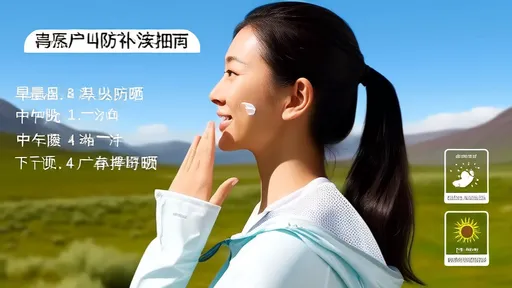
The high-altitude environment presents unique challenges for skin protection, particularly when it comes to sun exposure. With thinner atmosphere and increased UV radiation, plateau regions demand a more rigorous approach to sunscreen application than lowland areas. Travelers and residents alike must understand how altitude intensifies solar damage and adapt their skincare routines accordingly.
At elevations above 2,500 meters, UV radiation increases approximately 4-5% for every 300 meters of altitude gained. This means a hiker at 3,000 meters experiences UV intensity comparable to tropical latitudes at sea level. The crisp mountain air creates a false sense of security—cool temperatures often mask the extreme solar exposure occurring at the skin's surface. Many make the critical mistake of applying sunscreen only in the morning, unaware that high-altitude conditions break down protective formulations faster.
Morning application forms just the foundation of proper high-altitude sun protection. The thin, dry air of mountainous regions causes sunscreen to evaporate more quickly, while sweat from physical activity further diminishes its effectiveness. Wind accelerates this process, stripping away protective layers much faster than in humid environments. Scientific studies demonstrate that SPF protection decreases by 50% within two hours under these conditions, compared to four hours at sea level.
Special consideration must be given to reflective surfaces common in high-altitude landscapes. Snow reflects up to 80% of UV radiation, nearly doubling exposure. Even grassy slopes reflect about 25% of UV rays. This multidirectional bombardment means shaded areas provide less protection than expected, as reflected light reaches skin from all angles. The combination of direct and reflected radiation creates a perfect storm for accelerated skin damage.
Midday reapplication becomes absolutely non-negotiable in plateau regions. Between 10 AM and 2 PM when UV radiation peaks, sunscreen breaks down most rapidly. Those spending extended time outdoors should reapply every 60-90 minutes during these hours. For extreme conditions—glacier travel, high-altitude trekking, or snow sports—even more frequent application may be necessary. Water-resistant formulations offer some advantage, but no product maintains full efficacy beyond two hours in harsh mountain environments.
The physical challenges of high-altitude sun protection shouldn't be underestimated. Cold fingers struggle with pump dispensers, while freezing temperatures can alter sunscreen consistency. Many mountaineers keep their sunscreen in interior pockets to prevent freezing, though this must be balanced with accessibility for frequent reapplication. Stick formulations often prove most practical for winter sports, avoiding the mess of creams in subzero conditions.
Post-activity skin care matters just as much as preventive measures. High-altitude UV exposure combined with dry air leaves skin severely dehydrated. After sun exposure, gentle cleansing followed by rich moisturizers helps repair the moisture barrier. Antioxidant serums can help counteract oxidative stress from intense UV exposure. These evening routines complete the 24-hour cycle of high-altitude skin protection.
Understanding these principles transforms sun protection from an afterthought to an integral part of high-altitude preparation. Whether climbing Himalayan peaks or skiing in the Alps, proper sunscreen discipline makes the difference between cherished mountain memories and painful sunburns that can ruin expeditions. The mountains demand respect—not just for their physical challenges, but for their invisible solar threats as well.

By /Aug 6, 2025

By /Aug 6, 2025

By /Aug 6, 2025

By /Aug 6, 2025

By /Aug 6, 2025

By /Aug 6, 2025

By /Aug 6, 2025

By /Aug 6, 2025

By /Aug 6, 2025

By /Aug 6, 2025
By /Aug 6, 2025

By /Aug 6, 2025

By /Aug 6, 2025

By /Aug 6, 2025

By /Aug 6, 2025

By /Aug 6, 2025

By /Aug 6, 2025
By /Aug 6, 2025

By /Aug 6, 2025

By /Aug 6, 2025
