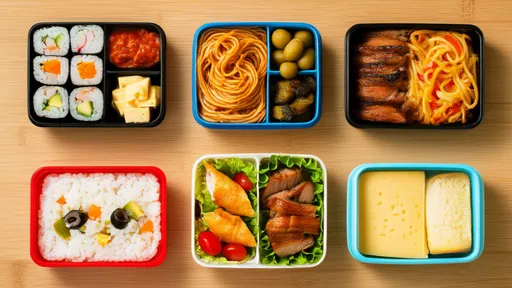
In the quiet moments of midday, across the globe, a universal ritual unfolds—the opening of a lunchbox. Yet within this simple act lies a world of cultural diversity, a silent narrative of heritage, values, and daily life. From the meticulously arranged bento boxes of Japan to the hearty, rustic tiffins of India, the contents of these portable meals are far more than mere sustenance; they are edible anthropology, offering a taste of identity and tradition in every bite.
In Japan, the lunchbox is an art form, a practice steeped in aesthetics and intentionality. Known as bento, these meals are often prepared with a keen eye for balance, color, and nutrition. A typical bento might feature a bed of rice, a piece of grilled fish or tamagoyaki (a rolled omelet), pickled vegetables, and perhaps a few edamame or a slice of fruit. The arrangement is deliberate, designed to be visually appealing and nutritionally complete. For children, bento boxes can become playful creations, with rice shaped into pandas or characters from popular anime, a practice known as kyaraben. This attention to detail reflects broader cultural values: discipline, care, and the importance of presentation in daily life. The bento is not just a meal; it is a gesture of love, often prepared by parents for their children or by partners for one another, embodying the Japanese concept of omotenashi, or wholehearted hospitality.
Traveling westward to South Korea, the dosirak offers a different but equally thoughtful approach. These lunchboxes often center around kimchi, the fermented vegetable staple that is a cornerstone of Korean cuisine, accompanied by rice, a protein like bulgogi (marinated beef) or grilled fish, and an array of banchan (small side dishes). The flavors are bold, spicy, and pungent, a reflection of a cuisine that values intensity and fermentation. The dosirak is practical, designed for a culture with a fast-paced work life, yet it never sacrifices depth of flavor. It speaks to a resilience and a preference for meals that are both robust and efficient, often eaten quickly at a desk but savored for their complex tastes. The reusable stainless-steel containers common for dosirak also hint at a modern, eco-conscious sensibility layered atop traditional practices.
In stark contrast, the Indian tiffin carrier, or dabba, is a symphony of spices and textures, often comprising multiple stacked containers. A typical lunch might include roti or rice, a dal (lentil curry), a vegetable sabzi, and perhaps a meat curry or yogurt-based raita. The flavors are layered and complex, a testament to a subcontinent with vast culinary diversity. The tiffin system is famously supported by the dabbawalas of Mumbai, a complex logistics network that delivers home-cooked meals to office workers, ensuring a taste of family and comfort amidst the urban hustle. This practice underscores the deep importance of home and familial connection in Indian culture, where food is an expression of love and community. The meal is often shared, with colleagues tasting each other's dishes, turning lunch into a social, communal event.
Crossing the Atlantic to the United States, the lunchbox narrative shifts toward convenience and individualism. The classic American lunch might consist of a sandwich—perhaps peanut butter and jelly or turkey on wheat—a bag of chips, a piece of fruit, and a cookie. It is a meal built for speed and simplicity, often assembled quickly in the morning or pre-packaged. This reflects a culture that prizes efficiency and personal choice. The lunchbox itself has become a pop culture icon, from the retro metal boxes adorned with superheroes to the modern insulated sack. However, there is a growing counter-movement, with a focus on organic, locally-sourced ingredients and "clean eating," indicating a rising consciousness about health and sustainability, even within the constraints of a busy lifestyle.
In many European countries, the approach is often more rustic and tied to regional produce. In France, a child's lunchbox might contain a piece of baguette with ham and cheese, a salad, a yogurt, and a piece of fruit—simple, fresh, and devoid of the processed items common elsewhere. It reflects the French culinary philosophy: quality over quantity, and an appreciation for fresh, authentic flavors. In Italy, a panino with mozzarella, tomato, and basil might be accompanied by olives and a piece of ciabatta, echoing the Mediterranean diet's emphasis on fresh vegetables, olive oil, and simplicity. These lunches are not overly elaborate but are crafted with high-quality ingredients, speaking to a deep-seated respect for food provenance and culinary tradition.
Meanwhile, in Mexico, the lonchera often carries the vibrant, bold flavors of its cuisine. It might hold tacos de canasta (steamed tacos), a portion of rice and beans, fresh salsa, and a piece of juicy fruit like mango or watermelon. The flavors are bright, spicy, and unapologetically robust, a direct reflection of a culture that celebrates life and community through its food. The meal is often hearty, designed to provide energy for a long day, and is frequently shared, reinforcing social bonds.
In the world's lunchboxes, we find a beautiful paradox: they are deeply personal, yet universally understood. They tell stories of migration, too, as families adapt traditional recipes to new environments. An Indian child in London might have a dosa wrap, and a Japanese family in Brazil might incorporate local fruits into a bento. This evolution shows that food culture is not static; it is a living, breathing dialogue between the past and the present, between homeland and new home.
Ultimately, the humble lunchbox is a microcosm of culture. It reveals what a society values: aesthetics, efficiency, family, health, or tradition. It is a daily, edible letter from home, a comfort in a foreign place, and a reminder of who we are and where we come from. To unpack a lunchbox is to unpack a culture, one flavorful, telling bite at a time.
By /Aug 20, 2025
By /Aug 20, 2025
By /Aug 20, 2025
By /Aug 20, 2025
By /Aug 20, 2025
By /Aug 20, 2025
By /Aug 20, 2025

By /Aug 20, 2025
By /Aug 20, 2025
By /Aug 20, 2025
By /Aug 20, 2025
By /Aug 20, 2025
By /Aug 20, 2025

By /Aug 20, 2025
By /Aug 20, 2025
By /Aug 20, 2025
By /Aug 20, 2025
By /Aug 20, 2025
By /Aug 20, 2025
By /Aug 20, 2025
