In the realm of traditional snacks, few treats carry the nostalgic charm and wholesome simplicity of fruit leathers. Among these, hawthorn fruit leather, known as Guodanpi in Chinese, stands out for its tangy flavor and cultural significance. With growing consumer interest in clean eating and transparency in food production, the demand for zero-additive versions of such classics has surged. This article delves into the meticulous process of crafting hawthorn fruit leather from scratch, emphasizing a pure, additive-free approach that honors tradition while catering to modern health-conscious preferences.
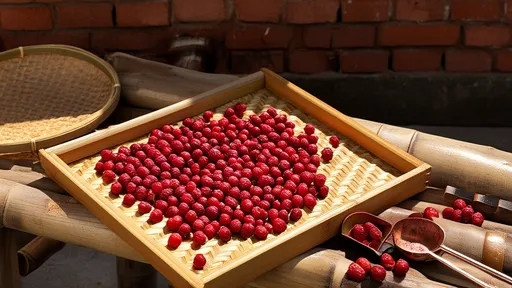
The journey begins with selecting high-quality hawthorn fruit, the cornerstone of any authentic Guodanpi. Hawthorn, or Crataegus pinnatifida, is a small, tart fruit rich in pectin, vitamins, and antioxidants, making it ideal for leathers without needing thickeners or preservatives. Opt for fresh, ripe hawthorns with a vibrant red hue and firm texture, avoiding any bruised or overly soft specimens. Sourcing organic or pesticide-free fruit is advisable to ensure purity from the outset, aligning with the zero-additive philosophy. Thoroughly wash the fruits under cold running water to remove dirt and residues, a crucial step to prevent contaminants from affecting the final product's taste and safety.
Once cleaned, the hawthorns require destoning, a task that demands patience and precision. Using a small knife or a specialized fruit corer, carefully cut around the stem and blossom ends, then slice the fruit open to expose the hard seeds nestled within. Remove all seeds and any tough membranes, as these can impart bitterness and affect the leather's smooth texture. This manual process, though time-consuming, ensures that no chemical treatments or automated machinery—which might introduce unwanted elements—are involved. The deseeded hawthorn flesh should be roughly chopped to facilitate even cooking, preparing it for the next transformative stage: simmering.
Simmering the hawthorn is where its natural pectin works magic, transforming the fruit into a thick, spreadable puree without additives. Place the chopped hawthorn in a heavy-bottomed pot with a minimal amount of water—just enough to prevent sticking—typically a ratio of one part water to four parts fruit. Bring it to a gentle boil over medium heat, then reduce to a low simmer, stirring occasionally to avoid scorching. As the fruit softens and breaks down over 30-45 minutes, its innate acidity and pectin content will naturally thicken the mixture into a cohesive mass. For those seeking a smoother consistency, a food mill or blender can be used to puree the cooked hawthorn, but avoid straining it, as the fiber contributes to the leather's structure and nutritional value.
With the puree ready, the focus shifts to drying, the most critical phase in achieving that characteristic leathery texture. Spread the puree evenly onto food-grade dehydrator trays lined with parchment paper or silicone mats, aiming for a thickness of about 1/4 inch (6 mm). Consistency is key here; uneven layers may dry at different rates, leading to brittle spots or undesired moisture retention. If using a dehydrator, set it to 135°F (57°C) and allow 6-8 hours for drying, checking periodically for pliability. In the absence of a dehydrator, an oven on its lowest setting with the door slightly ajar can suffice, though it may require more attentive monitoring to prevent over-drying. The goal is a supple, non-sticky sheet that peels away cleanly, indicating perfect moisture removal without chemical desiccants.
Once dried, the hawthorn leather should be cooled completely before handling to avoid tearing. Cut it into strips or shapes using scissors or a knife, then store it in an airtight container with parchment paper between layers to prevent sticking. Properly dried and stored, this zero-additive Guodanpi can last for months at room temperature, its shelf life extended naturally through the low water activity achieved during drying. The result is a chewy, intensely flavored snack that captures the essence of hawthorn—sweet, tangy, and subtly complex—without a hint of artificiality.
Embracing this traditional method not only yields a healthier alternative to commercial fruit leathers but also reconnects us to time-honored culinary practices. In an era where food labels are cluttered with unpronounceable ingredients, crafting zero-additive hawthorn fruit leather at home empowers consumers to take control of their diet, ensuring transparency and quality from fruit to finish. It’s a testament to how simplicity, when executed with care, can produce something truly extraordinary—one delicious, chewy bite at a time.
By /Aug 20, 2025
By /Aug 20, 2025
By /Aug 20, 2025

By /Aug 20, 2025

By /Aug 20, 2025
By /Aug 20, 2025
By /Aug 20, 2025
By /Aug 20, 2025
By /Aug 20, 2025
By /Aug 20, 2025
By /Aug 20, 2025
By /Aug 20, 2025
By /Aug 20, 2025
By /Aug 20, 2025
By /Aug 20, 2025
By /Aug 20, 2025
By /Aug 20, 2025
By /Aug 20, 2025
By /Aug 20, 2025

By /Aug 20, 2025
