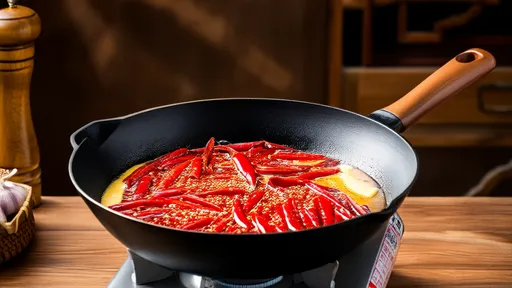
In the sizzling world of wok cooking, few ingredients command as much respect and caution as the dried chili pepper. Its transformation from a wrinkled, dormant pod to a fragrant, flavor-releasing powerhouse hinges entirely on one critical factor: oil temperature. Mastering this moment—the precise point at which dried chilis meet hot oil—is what separates a dish infused with deep, aromatic warmth from one marred by the acrid, bitter taste of scorched capsicum. This is not merely a step in a recipe; it is a fundamental principle of fire and flavor.
The concept of "doneness" in heating oil, often referred to in Chinese culinary terms as "cheng" or "levels of readiness," is a sensory language spoken by experienced cooks. It describes the oil's temperature and behavior through visual and auditory cues rather than relying on a thermometer. For the dried chili, the target is a specific window within this spectrum. The oil must be hot enough to instantly awaken the chili's volatile aromatic compounds and capsaicinoids, the sources of its scent and heat, but not so ferociously hot that it carbonizes the delicate flesh of the pepper in a matter of seconds. The goal is a swift, controlled shock, not an execution.
So, what is this golden temperature? Through generations of trial, error, and perfected technique, the consensus points firmly to what is known as "medium-high" heat. On the traditional "cheng" scale, this often translates to between 50% and 60% of the oil's maximum heating potential before it begins to smoke. In more modern terms, we are looking at a range of approximately 325°F to 350°F (163°C to 177°C). At this stage, the oil will shimmer noticeably across its surface, and a single drop of water flicked into the wok will skitter and evaporate almost instantly with a vigorous, sharp sizzle. It is lively and potent, but not yet violent.
Dropping your dried chilis into oil at this precise stage initiates a rapid and complex chemical ballet. The intense, conductive heat instantly begins to fry the chili's residual moisture, creating the signature initial burst of steam and aggressive sizzle. Almost simultaneously, it starts to solubilize and carry the fat-soluble flavor molecules, releasing the deep, toasty, nutty, and slightly fruity aromas that are the hallmark of well-prepared "chili oil" or "hong you." The capsaicin, the compound responsible for the "heat," also transfers efficiently into the oil, building the foundational spice level for the entire dish. This process, achieved at the correct temperature, happens in a flash—typically within 20 to 45 seconds—resulting in chilis that darken to a rich, appetizing reddish-brown, perhaps with a few darker spots, but are a world away from being uniformly black and bitter.
The consequences of missing this thermal mark are stark and immediate. Oil that is too cold, perhaps at a low simmer below 300°F (149°C), is an equally ineffective tool. The chilis will languish in the oil, stewing rather than frying. They will become sodden with grease, turning leathery and pale. Instead of a quick, aromatic release, they will leach their heat and flavor slowly and inefficiently, resulting in a dull, flat, and oddly greasy tasting oil that lacks the vibrant punch the dish requires. It’s a wasted opportunity, producing a muted shadow of what the chili could have been.
The far more common and disastrous error, however, is oil that is too hot. When oil approaches or exceeds its smoke point—which for many common cooking oils like peanut or vegetable oil is around 400-450°F (204-232°C)—it becomes a destructive force. Introducing a dried chili to superheated oil is a near-instantaneous reaction. The exterior of the chili carbonizes on contact, creating a layer of bitter, charred carbon that effectively seals in any remaining good flavors while imparting an overwhelming acridity. The sugars within the pepper caramelize and then burn in a heartbeat. The aromatic compounds don't get a chance to develop and release; they are incinerated. Within three to five seconds, your prized ingredient is transformed from a flavor bomb into an ashy, bitter contaminant that can ruin an entire wok of food. The oil itself will often take on this unpleasant burnt taste, making recovery impossible.
Beyond the simple temperature gauge, a few additional factors influence this delicate operation. The type of oil chosen is paramount. Oils with a high smoke point, such as peanut, avocado, or refined safflower oil, are the best soldiers for this job. They provide a stable, high-heat environment for the chili to bloom without the oil itself breaking down and smoking prematurely, which would add its own off-flavors. The preparation of the chili also plays a role. Whole dried chilis will take a second longer to transmit heat to their core than chili flakes or roughly chopped pieces. For flakes, a slightly lower temperature or an even quicker hand might be necessary to avoid crossing the line from toasted to torched. Finally, the quantity matters. Adding a large handful of chilis to a modest amount of oil will cause the oil's temperature to plummet temporarily. This must be anticipated; the initial heat might need to be a touch higher to compensate for this drop, ensuring the oil stays within the effective frying window.
Recognizing success is a multisensory experience. Your ears will tell you first: the sound upon adding the chilis should be a confident, lively, and persistent sizzle—a sound of active frying, not a weak sputter or a terrifying splatter. Your eyes are next: watch for the color change. The chilis should darken noticeably but maintain a varied hue of deep reds and browns. The moment you see them threatening to turn black at the edges, they are done. Your nose provides the final confirmation: the air should be filled with a warm, peppery, slightly smoky, and incredibly appetizing aroma, not a pungent, choking smoke that makes you cough. This is the scent of culinary victory.
Ultimately, taming the dried chili in a searing wok is a perfect illustration of the core philosophy underlying much of great cooking: the application of controlled power. It is the understanding that heat is not a binary tool to be applied blindly, but a nuanced instrument to be wielded with knowledge and timing. Hitting that 325-350°F sweet spot is the difference between unlocking a world of deep, layered, mouthwatering fragrance and creating a harsh, bitter mistake. It is a fundamental skill, a minute-long dance with fire that lays the flavorful groundwork for countless iconic dishes, from Mapo Tofu to Dan Dan Noodles. It is, in its essence, the art of not burning, but blooming.
By /Aug 20, 2025
By /Aug 20, 2025

By /Aug 20, 2025
By /Aug 20, 2025
By /Aug 20, 2025
By /Aug 20, 2025
By /Aug 20, 2025
By /Aug 20, 2025
By /Aug 20, 2025
By /Aug 20, 2025
By /Aug 20, 2025
By /Aug 20, 2025
By /Aug 20, 2025
By /Aug 20, 2025
By /Aug 20, 2025
By /Aug 20, 2025
By /Aug 20, 2025
By /Aug 20, 2025
By /Aug 20, 2025

By /Aug 20, 2025
