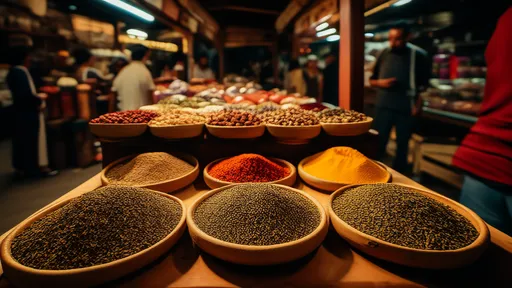
In the bustling alleys of local markets, far from the sanitized aisles of supermarkets, lies a treasure trove of culinary secrets waiting to be unearthed. These are not the mass-produced sauces and seasonings that line global grocery shelves, but rather the hidden gems of regional flavor—artisanal, often homemade condiments that tell the story of a place, its people, and their palate. To discover them is to embark on a sensory journey through culture and tradition, one taste at a time.
Venture into any vibrant market in Southeast Asia, and you will likely encounter a humble stall tucked away in a corner, its shelves lined with unlabeled jars filled with dark pastes and pungent mixtures. Here, you might find belacan, a fermented shrimp paste that is the soul of Malaysian and Indonesian cooking. Its aroma is potent, almost off-putting to the uninitiated, but when toasted or fried, it transforms into a deep, savory umami that forms the base of countless dishes, from sambal to laksa. This is not an ingredient you can easily find in standardized form; each batch varies slightly, reflecting the maker's technique and the local shrimp's seasonality.
Travel to the markets of Oaxaca in Mexico, and amid the colorful displays of chilies and dried herbs, you will discover mole paste in its many regional variations. Unlike the jarred versions sold abroad, the mole here is often ground by hand on metates, combining ingredients like chocolate, various chilies, nuts, and spices into a complex, layered paste that has been passed down through generations. Each family might guard their recipe jealously, and the flavor profile—whether it's the sweet and smoky mole negro or the fiery mole coloradito—speaks directly of the land and its history.
In the narrow lanes of Indian bazaars, especially in the south, you might stumble upon small-scale vendors selling gunpowder, not the explosive kind, but a spicy blend of lentils, chilies, and spices that is traditionally eaten with oil and rice. This condiment, known as molaga podi in Tamil, is a staple in many households, yet its composition changes from town to town. Some versions include dried garlic or roasted peanuts, others are heavy on cumin or curry leaves. It is a taste of home for many, a quick flavor boost that embodies the region's love for heat and texture.
European markets, too, hold their own secrets. In the farmers' markets of Provence, you could find tapenade made not with canned olives, but with locally harvested ones, crushed with capers from the nearby cliffs and anchovies from the Mediterranean. The result is a briny, intense spread that captures the essence of the French coast. Similarly, in Italy, especially in Calabria or Sicily, look for nduja, a spicy, spreadable salami that is slowly gaining global fame but remains best when sourced from small producers who use ancient recipes and locally reared pork.
What makes these hidden seasonings so special is their tie to terroir—a concept often associated with wine, but equally applicable here. The chilies grown in a particular valley, the shrimp harvested from a specific coastline, the olives from a single grove—all impart a unique character that cannot be replicated industrially. Moreover, the methods of preparation—sun-drying, stone-grinding, fermenting in earthenware—are as important as the ingredients themselves, adding layers of flavor and texture that machines cannot duplicate.
Finding these gems requires more than just a sharp eye; it demands engagement. Market vendors are often the custodians of these culinary traditions, and a friendly conversation can lead to discoveries no guidebook would offer. They might share a sample of a homemade berbere blend from Ethiopia, with its complex mix of fenugreek and chili, or a jar of gochujang from a Korean market that has been fermented for years, not months, yielding a deeper, sweeter heat. These interactions transform shopping from a transaction into an experience, a moment of cultural exchange.
Yet, the existence of these artisanal condiments is threatened by the rise of industrialization and homogenization. As global trade makes standardized products more accessible, younger generations sometimes abandon the labor-intensive processes required to make these traditional seasonings. However, there is a growing movement among food enthusiasts and chefs to preserve and promote these hidden flavors, recognizing that they are not merely ingredients but edible heritage.
For the curious traveler or passionate home cook, seeking out these local market treasures is more than a culinary quest; it is a way to connect with a culture on a profound level. To drizzle a handmade pomegranate molasses from a Turkish bazaar over a dish, or to mix a pinch of Egyptian dukkah into your oil, is to bring a piece of that place into your kitchen. These condiments are memories in a jar, stories in a paste, and they remind us that the most authentic flavors are often found off the beaten path, waiting for those willing to look.
So next time you wander through a local market, bypass the flashy, packaged goods and seek out the modest stalls, the ones without fancy labels. Ask questions, taste fearlessly, and let your palate guide you. You might just discover the secret ingredient that defines a region's soul—and perhaps, bring a taste of it home with you.
By /Aug 20, 2025
By /Aug 20, 2025
By /Aug 20, 2025

By /Aug 20, 2025

By /Aug 20, 2025
By /Aug 20, 2025
By /Aug 20, 2025
By /Aug 20, 2025
By /Aug 20, 2025
By /Aug 20, 2025
By /Aug 20, 2025
By /Aug 20, 2025
By /Aug 20, 2025
By /Aug 20, 2025
By /Aug 20, 2025
By /Aug 20, 2025
By /Aug 20, 2025
By /Aug 20, 2025
By /Aug 20, 2025

By /Aug 20, 2025
